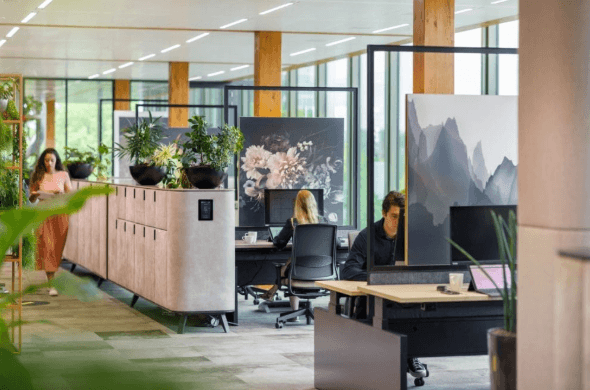
Smart offices convert data into actionable workflows that heighten productivity and wellbeing. Sensors monitor lighting, air quality, and space use, translating signals into personalized recommendations and ergonomic insights. Real-time dashboards track energy, collaboration, and safety, creating transparent accountability. The result is scalable, measurable outcomes that align cost with comfort while enabling faster decision-making. Organizations that pilot transparent, data-driven deployments will discover new resource efficiencies and competitive advantages that justify ongoing investment.
What Smart Office Technology Really Delivers
Smart office technology delivers measurable improvements across productivity, efficiency, and employee experience. Deployments center on lighting automation, energy dashboards, seating analytics, and air quality monitoring to balance comfort with cost. Device interoperability enables seamless workflows while privacy considerations guide data handling. Results skew toward reduced waste, faster decisions, and clearer utilization patterns, empowering teams with transparent, freedom-oriented operational insight.
How Data and Sensors Personalize the Workday
Data and sensors enable personalized workday experiences by converting ambient signals into actionable workplace insights. In practice, platforms analyze occupancy, thermal, and lighting data to tailor space usage, break schedules, and resource allocation. This approach supports employee wellbeing through ergonomic, noise-aware recommendations and energy optimization by smoothing demand, reducing waste, and guiding autonomous adjustments, while preserving personal freedom and voluntary participation.
Collaboration, Safety, and Efficiency: The New Office Ecosystem
Collaboration, safety, and efficiency define the contemporary office ecosystem by integrating real-time communication, risk monitoring, and process optimization into a cohesive framework. Data-driven insights reveal how collaboration metrics track teamwork health, enabling managers to align resources and deadlines without friction.
Emphasis on safety compliance reduces incidents, while automated workflows streamline operations, empowering teams to innovate with confidence and measurable accountability.
Choosing the Right Smart Solutions for Your Team
Choosing the right smart solutions for a team hinges on aligning capabilities with concrete goals, workflows, and user adoption. Decision frameworks emphasize interoperability, scalable architecture, and measurable outcomes. Reliability metrics quantify uptime and fault tolerance, guiding vendor selection, while cost optimization analyzes total ownership costs and return on investment. Teams benefit from transparent pilots, data-driven scoring, and standardized rollout plans to sustain gains and freedom.
Frequently Asked Questions
What Is the ROI Timeline for Smart Office Deployments?
ROI timeline for smart office deployments varies; typically, payback occurs within 12–36 months depending on scale. Deployment costs are offset by energy savings, productivity gains, and occupancy analytics, while continuous optimization extends long-term value and resilience.
How Do Smart Offices Affect Employee Autonomy and Privacy?
Smart offices can enhance efficiency while triggering privacy concerns and autonomy tradeoffs; data-driven analyses show improved collaboration and monitoring implications for freedom. Overall, organizations must balance transparency, consent, and robust governance to preserve employee autonomy without compromising security.
Can AI in Offices Misinterpret User Behavior?
Silicon lanterns cast shadows of misread intent; AI bias and misclassification can distort user perception, causing false alarms or unwarranted controls. Analysts warn: careful calibration, transparent thresholds, and ongoing auditing are essential for trustworthy, freedom-preserving offices.
Are Smart Offices Accessible for All Team Sizes?
Smart offices are accessible for many team sizes, though accessibility gaps persist; scalable adoption enables small team viability and cost efficiency, but ongoing investment is required. Data-driven trends indicate inclusive, flexible implementations support freedom while maintaining performance.
See also: How Smart Technology Is Improving Transportation
What Are the Long-Term Maintenance Costs of Smart Systems?
Maintenance costs vary with system scale, but long-term expenses trend downward as.Core runtime efficiency and modular upgrades reduce total ownership. Integration complexity influences upfront investments; however, standardized interfaces mitigate risk, enabling predictable budgeting and data-driven optimization for flexible, freedom-oriented environments.
Conclusion
Smart office technology delivers measurable gains in productivity, wellbeing, and resource efficiency, translating data into actionable workflows. By tying lighting, air quality, seating analytics, and energy dashboards to user needs, environments become adaptive rather than static. One compelling statistic: organizations with integrated smart systems report up to 20–30% improvements in space utilization and a 10–15% reduction in energy costs. As analytics mature, teams gain clearer visibility into collaboration health and operation transparency, enabling proactive optimization and scalable decision-making.
